Which Best Describes the Role of Nucleic Acids
To provide cellular structure D. It exits the nucleus for the cytoplasm of the cell.
Nucleic Acids
Nucleic acids include DNA and RNA.
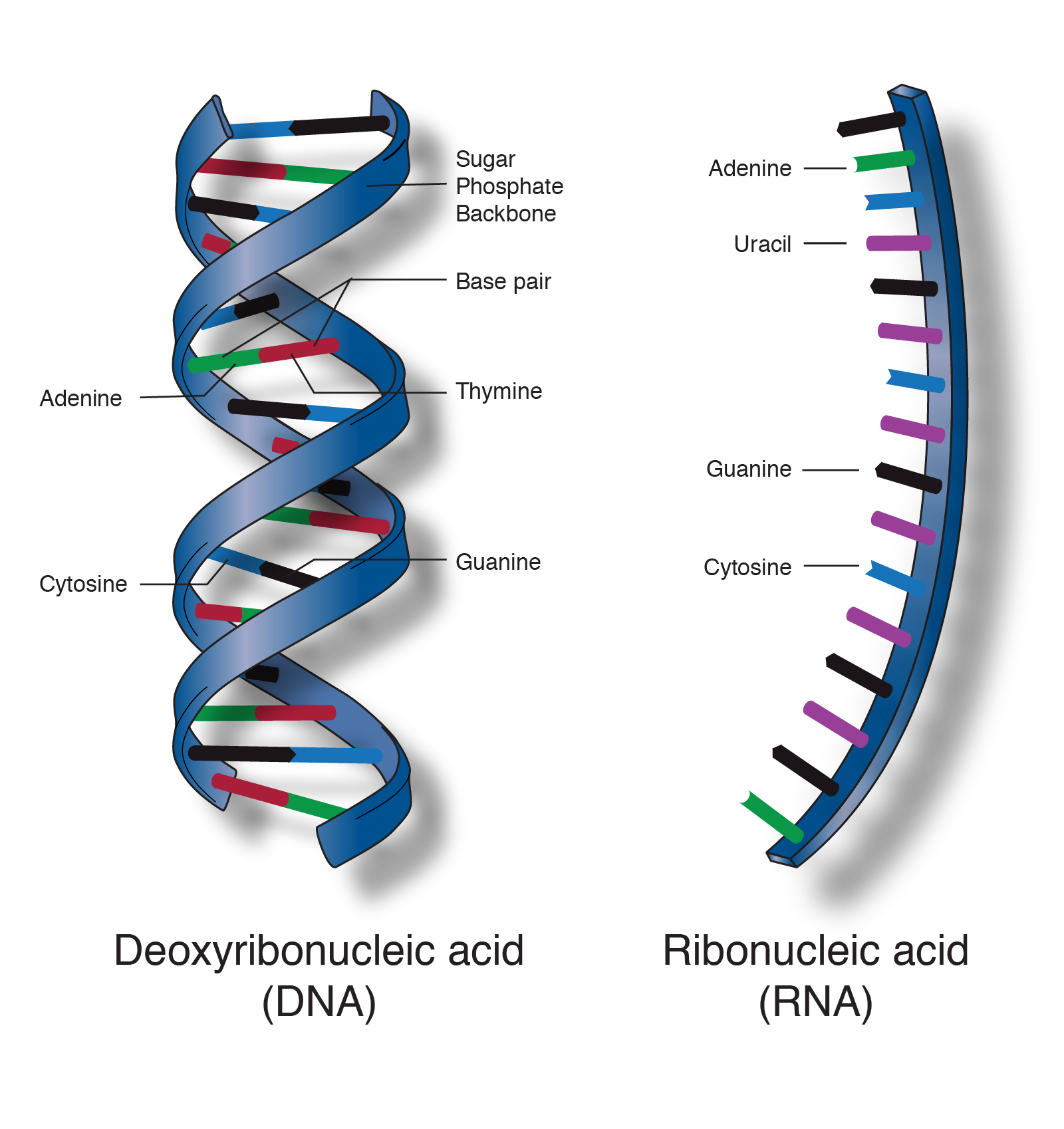
. The specific sequence of bases in DNA indicates coded instructions to manufacture particular proteins. Deoxyribonucleic acid DNA encodes the information the cell needs to make proteins. Which pair of statements best describes an essential amino acid.
Question 15 60 seconds Q. To fight against disease 2. They carry the genetic blueprint of a cell and carry instructions for the functioning of the cell.
Nucleic acids are the main information-carrying molecules of the cell and by directing the process of protein synthesis they determine the inherited characteristics of every living thing. Select all that apply. An example is aspartic acid.
The two main types of nucleic acids are deoxyribonucleic acid DNA and ribonucleic acid RNA. Information in the DNA is passed to another nucleic acid in the process which is called messenger RNA. Which best describes the main role of nucleic acids in living things.
They are responsible for the synthesis of protein in our body DNA fingerprinting is a method used by forensic experts. What is the significance of nucleic acids for cells. Because nucleic acids can be created with four bases and because base pairing rules allow information to be copied by using one strand of nucleic acids as a template to create another these molecules are able to both contain and copy information.
They serve as a source of quick energy for cells. 3 on a question. Which best describes the role of nucleic acids.
It is an amino acid that contains nitrogen. These essential fatty acids EFAs are based on linoleic acid omega-6 group and alpha-linolenic acid omega-3 group. It must be obtained from eating certain foods.
The hydrogen atoms are attached to the oxygen atom at an angle. This process is called transcription. The nucleic acids are vital biopolymers found in all living things where they function to encode transfer and express genes.
By far the most important function of nucleic acids for living things is their role as carriers of information. Science Biology QA Library Which best describes the main role of nucleic acids in living things. Nucleotides are composed of a nitrogenous base a five-carbon sugar and a phosphate group.
They serve as building blocks for tissues transport other molecules and help regulate. Answer choices They generate energy for the cell. They store and transmit information in the form of a code.
Every single living thing has something in common. It is an amino acid that cannot be made by the body. It is an amino acid that contains peptide bonds.
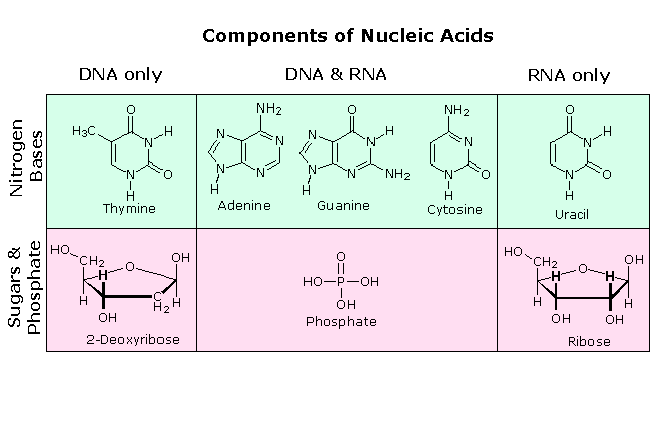
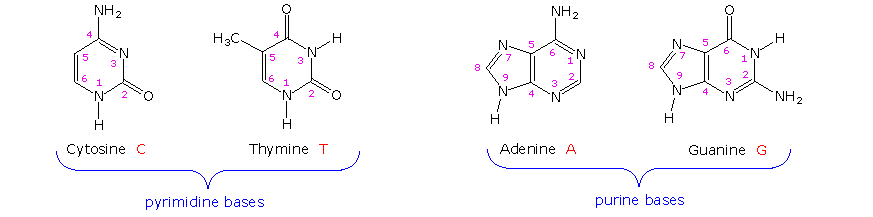
Answer choices amino acids. DNA is composed of a phosphate-deoxyribose sugar backbone and. Which statement best describes the components of nucleic acids.
For instance if an RNA strand reads UUCCGGAA. They are made up almost entirely of carbon and hydrogen. RNA is an especially important factor in the manufacturing of proteins.
They store and transmit information in the form of a code. To that of RNA as they are complementary. An example is proline.
Nucleic acids deoxyribonucleic acid DNA and ribonucleic acid RNA carry genetic information which is read in cells to make the RNA and proteins by which living things function. Shock absorbers help dull the force coming from the road so that. Then use it to answer the following question.
Nucleic acids are large molecules that carry tons of small details. What is most likely being shown. The molecule has an overall bent shape.
They are made up of chains of amino acids. The well-known structure of the DNA double helix allows this information to be copied and passed on to the next generation. They restrict what enters and leaves the cell.
To regulate cell processes C. Nucleic acids are important because they make up genetic information in living things. Nucleic acid is an important class of macromolecules found in all cells and viruses.
Nucleic acids are macromolecules that store genetic information and enable protein production. They are made up of nitrogen bases sugars and phosphates. The functions of nucleic acids have to do with the storage and expression of genetic information.
They serve as a long-lasting energy source for cells. They serve as a long-lasting energy source for cells. These large molecules are called nucleic acids because they were first identified inside the nucleus of cells however they are also found in mitochondria and chloroplasts as well as bacteria and viruses.
They carry the genetic blueprint of a cell and carry instructions for the functioning of the cell. The two main types of nucleic acids are deoxyribonucleic acid DNA and ribonucleic acid RNA. Nucleic acids are the most important macromolecules for the continuity of life.
The Functions of Nucleic Acids Nucleic acids are responsible for the transmission of inherent characters from parent to offspring. To transmit genetic information B. The function of nucleic acids is to store and transmit hereditary or genetic information there are two kinds of nucleic acids RNA and.
These molecules are composed of long strands of nucleotides. All the genetic information. Nucleic acids are found in every living thing plants animals bacteria viruses fungi that uses and converts energy.
They support and maintain the shape of the cell. Nucleic acids are involved in protein synthesis. Read the information below.
A cars tires feel a lot of force when they pass over holes or bumps in a road. People animals plants and more all are connected by genetic material. Nucleic acids are the most important macromolecules for the continuity of life.
They provide all instructions for cellular activities. Nucleic acids help synthesize proteins in the body. Nucleic acid naturally occurring chemical compound that is capable of being broken down to yield phosphoric acid sugars and a mixture of organic bases purines and pyrimidines.
They serve as a source of quick energy for cells. They are made up of carbon hydrogen and oxygen only.

Nucleic Acids An Overview Sciencedirect Topics
Nucleic Acids
Nucleic Acid

Comments
Post a Comment